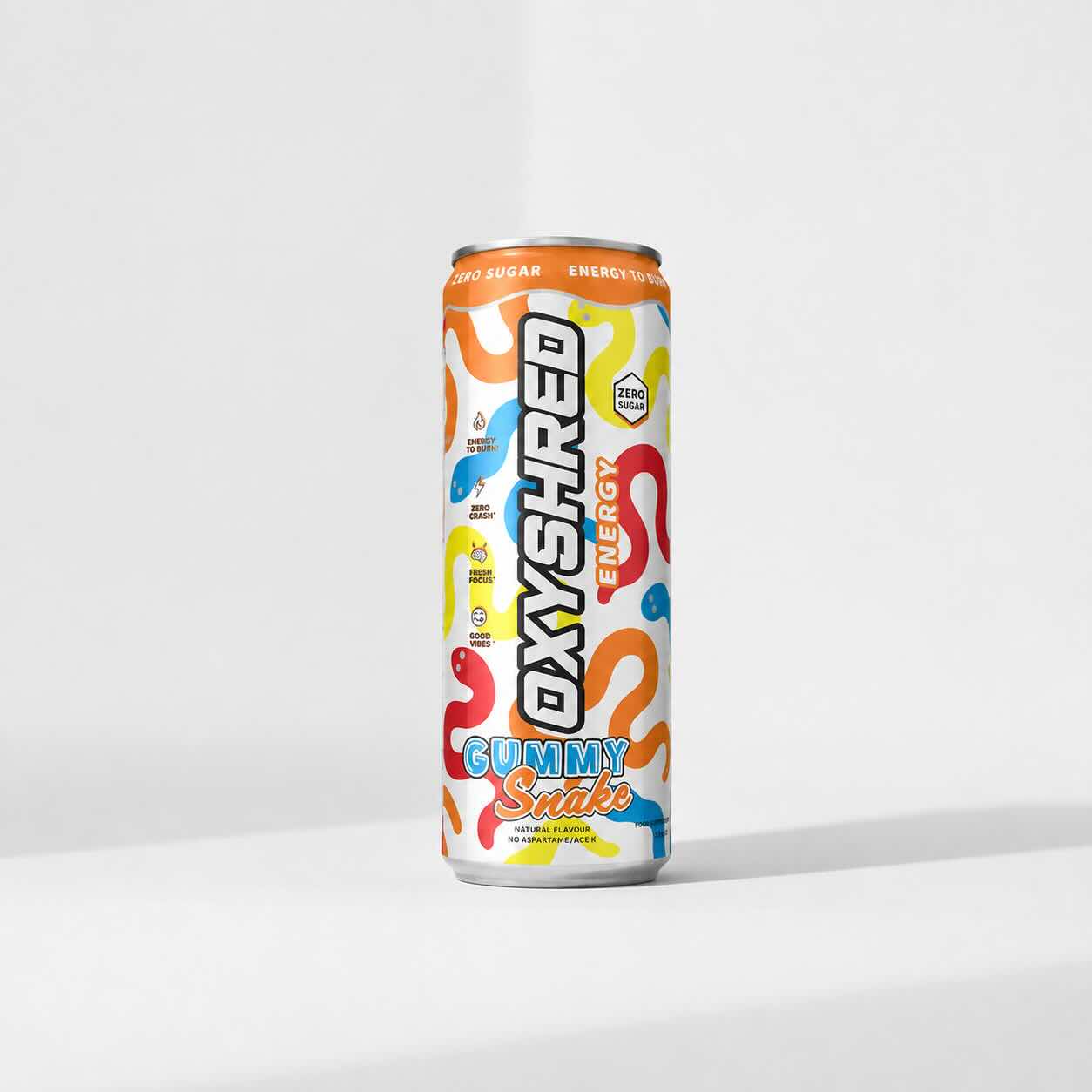
OxyShred Energy Drink Review
- Real, solid 180mg caffeine dose
- Genuinely multi-ingredient formula, not just caffeine
- Zero sugar and zero calories
- US label doesn't disclose most ingredient amounts
- Not built for pumps or performance
- Contains synephrine, a real stimulant some people are sensitive to
OxyShred Energy Drink Ingredient breakdown
| Ingredient | Clinically effective dose | Dose in OxyShred Energy Drink | Status |
|---|---|---|---|
| Caffeine Anhydrous | 200–400 mg | 180 mg | 90%Almost clinically effective |
| L-Carnitine Tartrate | 2 g | 1 g | 50%Under-dosed |
| N-Acetyl L-Tyrosine | 2–8 g | 0.16 g | 8%Under-dosed |
| Taurine | 2–3 g | 0.6 g | 30%Under-dosed |
| Bitter Orange Extract | 20–50 mg | 3–50 mg | 100%Clinically effective |
| Green Tea Extract | N/A | 50 mg | Unscored |
| Guarana Seed Extract | N/A | Undisclosed | Unscored |
| Inositol | N/A | Undisclosed | Unscored |
| Sodium | 0.3–1 g | 0.02 g | Hydration support |
| Potassium | 100–400 mg | 20 mg | Hydration support |
- Caffeine Anhydrous180 mg90%Almost clinically effective
- L-Carnitine Tartrate1 g50%Under-dosed
- N-Acetyl L-Tyrosine0.16 g8%Under-dosed
- Taurine0.6 g30%Under-dosed
- Bitter Orange Extract3–50 mg100%Clinically effective
- Green Tea Extract50 mgUnscored
- Guarana Seed ExtractUndisclosedUnscored
- InositolUndisclosedUnscored
- Sodium20 mgHydration support
- Potassium20 mgHydration support
AI analysis
OxyShred Energy Drink gives you a real, solid caffeine hit backed by a genuinely broader mix of ingredients than the can lets on at first glance -- carnitine, tyrosine, taurine, and a small amount of synephrine all contribute something.
None of these secondary ingredients have their exact amounts printed on the US can itself, so several of these doses come from a New Zealand version of the same product that does disclose them, plus one industry-standard estimate for the one ingredient neither label quantifies.
Mood and focus benefit the most from this fuller picture, though this is still fundamentally a caffeine-forward energy drink, not a pump or performance product.
Honest take: A decent, multi-ingredient energy drink once you look past what the can actually prints -- just don't expect pump or serious performance benefits from it.
Evidence references
Effects of Caffeine Intake on Endurance Running Performance and Time to Exhaustion: A Systematic Review and Meta-Analysis
Efficacy of a green tea extract rich in catechin polyphenols and caffeine in increasing 24-h energy expenditure and fat oxidation in humans
Does One Shot Work? The Acute Impact of a Single Taurine Dose on Exercise Performance: A Meta-Analytic Review
Effects of l-carnitine supplementation on weight loss and body composition: A systematic review and meta-analysis of 37 randomized controlled clinical trials with dose-response analysis


